



Sometimes, a shared kitchen table at BelVillage is a landscape of late-night laptops, cold coffee, and hurried emails. But wood and space are meant for something else, too. This week, we invited Lilibeth Bustos Linares, the founder of SoulDoodles, to share a quiet reflection on what happens when we finally decide to stop producing, and just start playing.
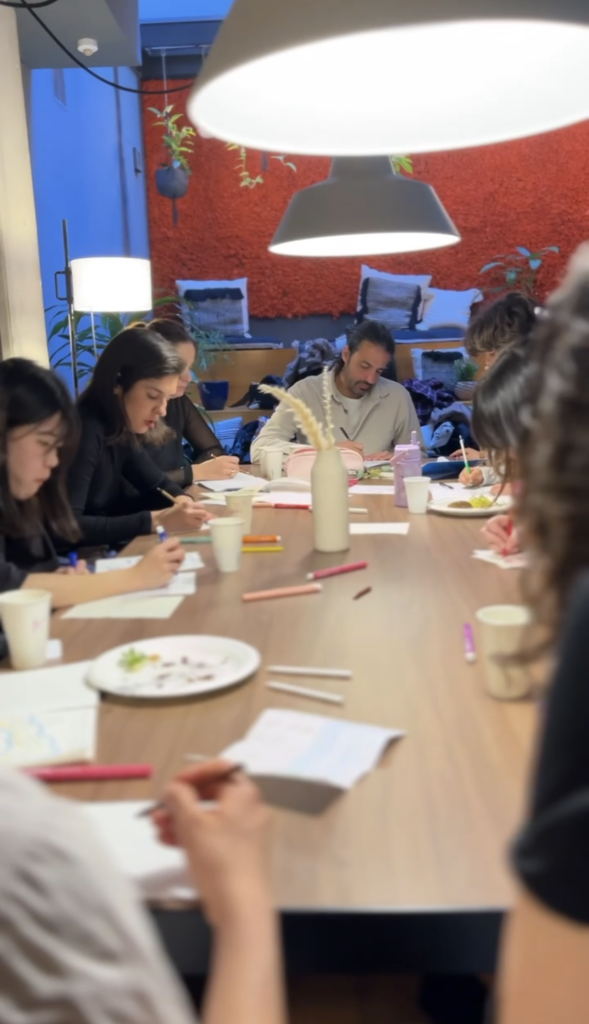
There is a version of you that existed before the deadlines, the inbox, the performance reviews, and the endless scroll. A version that could spend an entire afternoon drawing a dragon in the margins of a notebook, not because it was useful, but because it was alive.
That version of you didn’t disappear. They’ve just been waiting, quietly, for permission to come back.
It Started in the Quiet
During the uncertainty of COVID, when the world paused and the noise of ordinary life fell away, I found myself doing something I hadn’t done in years: reaching for paper and colors.
What started as a way to ease restlessness became something else entirely. Hours of simple illustrations, playful swirls, loose lines with no agenda. I started sharing them on LinkedIn, not as a strategy, not as a brand play, just sharing. And something unexpected happened.
People started asking: How are you doing this? What’s your process?
But here’s the thing: the doodles were never really about the drawings. They were about what the drawings created: a pocket of stillness in a world that never stops demanding your attention. With every line, I was slowing down. Disconnecting from the noise. Rediscovering what it feels like to be fully present in the moment you are actually in.
And somewhere in those hours of quiet creation, I felt something stir. A part of myself I had quietly forgotten. The child who used to create just for the joy of it, with no outcome in mind, no audience to impress.
What Happened When Adults Picked Up Crayons
Curious whether others might feel the same, I began hosting small workshops. What happened in those rooms changed something in me.
Grown adults, professionals, parents, executives, people who hadn’t touched a crayon in decades, began to laugh. To play. To share stories they didn’t even know they still carried. Time seemed to soften around us. Session after session, I watched people exhale something they’d been holding for far too long.
Over and over, they said the same thing: I didn’t realize how much I needed this.
That’s the moment a question took root in me, one that felt almost too simple to be serious: What would happen if adults allowed themselves to doodle again, just like they did when they were kids?
The Crisis Underneath the Burnout
We talk a lot about burnout. We talk about hustle culture, the 9-to-5, the unique pressures of burnout for digital nomads, and the always-on mindset that’s slowly hollowing people out. We download meditation apps, we take “digital detoxes,” we read self-help books on the weekend between answering emails.
But I think there’s something deeper going on than fatigue. We have forgotten how to be somewhere without producing something.
Creativity, real, unstructured, outcome-free creativity, has become a luxury we feel we can’t afford. Play has been quietly reclassified as a childhood activity, something you outgrow along with cartoon backpacks and recess. The inner child who used to make things just because it felt good has been told, gently but firmly, to sit down and be professional.
And so we keep performing. We optimize. We output. But we stop creating. We stop playing. And in doing so, we lose access to one of the most powerful forms of presence available to us.
What a Doodle Actually Does
There is real science behind what happens when you pick up a pen and draw without judgment.
Unstructured creative activity quiets the part of the brain that is constantly monitoring, planning, and evaluating. It slows the nervous system. It invites the mind to wander in ways that are profoundly restorative: the kind of mental wandering that generates insight, heals stress, and reconnects you to your own inner life.
But more than the neuroscience, I’ve seen it happen in real time, in real rooms, with real people.
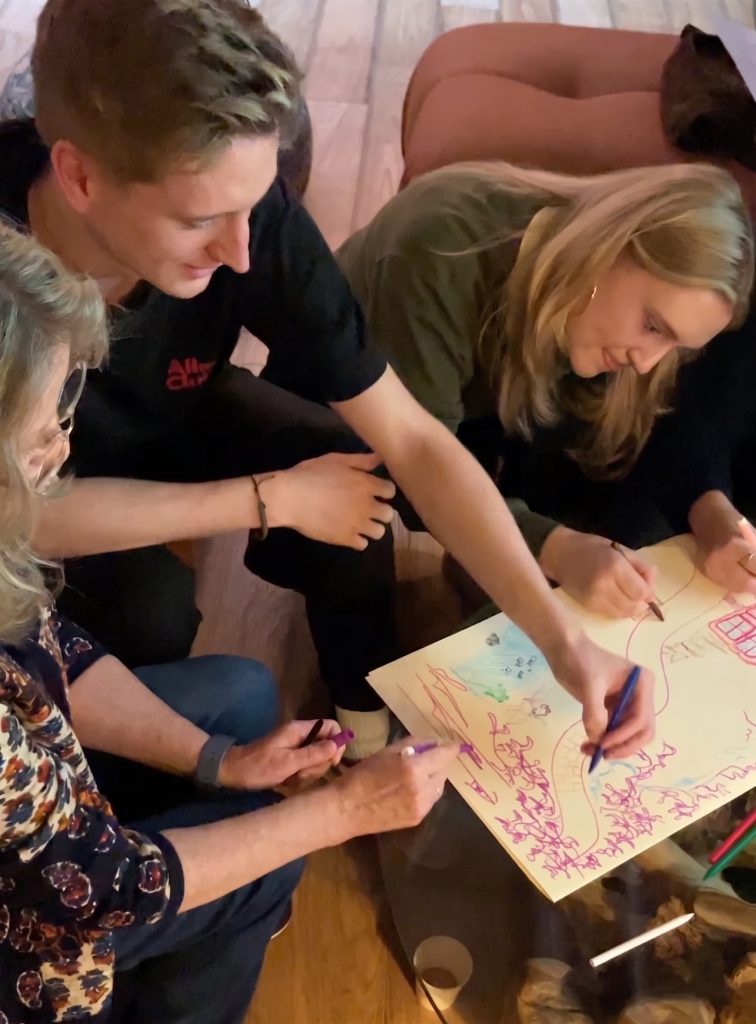
When you take away the expectation of skill, when you simply say here is a crayon, here is paper, there is no right answer, something unlocks. The perfectionist relaxes. The overachiever exhales. The person who has been managing everyone else’s needs for months suddenly has permission to just… play. And in that play, something is remembered.
SoulDoodles Is Not About Art
I want to be clear about something: SoulDoodles is not about becoming an artist. It is not about skill, technique, or output. It is about something that our hyperproductive culture has almost completely abandoned: the practice of creating for the sheer joy of it.
It is about slowing down long enough to notice what you actually feel. It is about community that forms not around accomplishment but around presence. It is about the quiet radical act of being in a room with other people, all of you making something imperfect and alive, with no agenda beyond the making itself.
Our gatherings aren’t workshops in the traditional sense. They’re a kind of permission. Permission to be bad at something. Permission to be silly. Permission to let your inner child out of the corner where adult life has quietly kept them.
And what we keep discovering, what keeps surprising us, is how much people need exactly this. Not just want. Need.
The Movement We’re Building
From that original question, what if adults doodled again?, something grew.
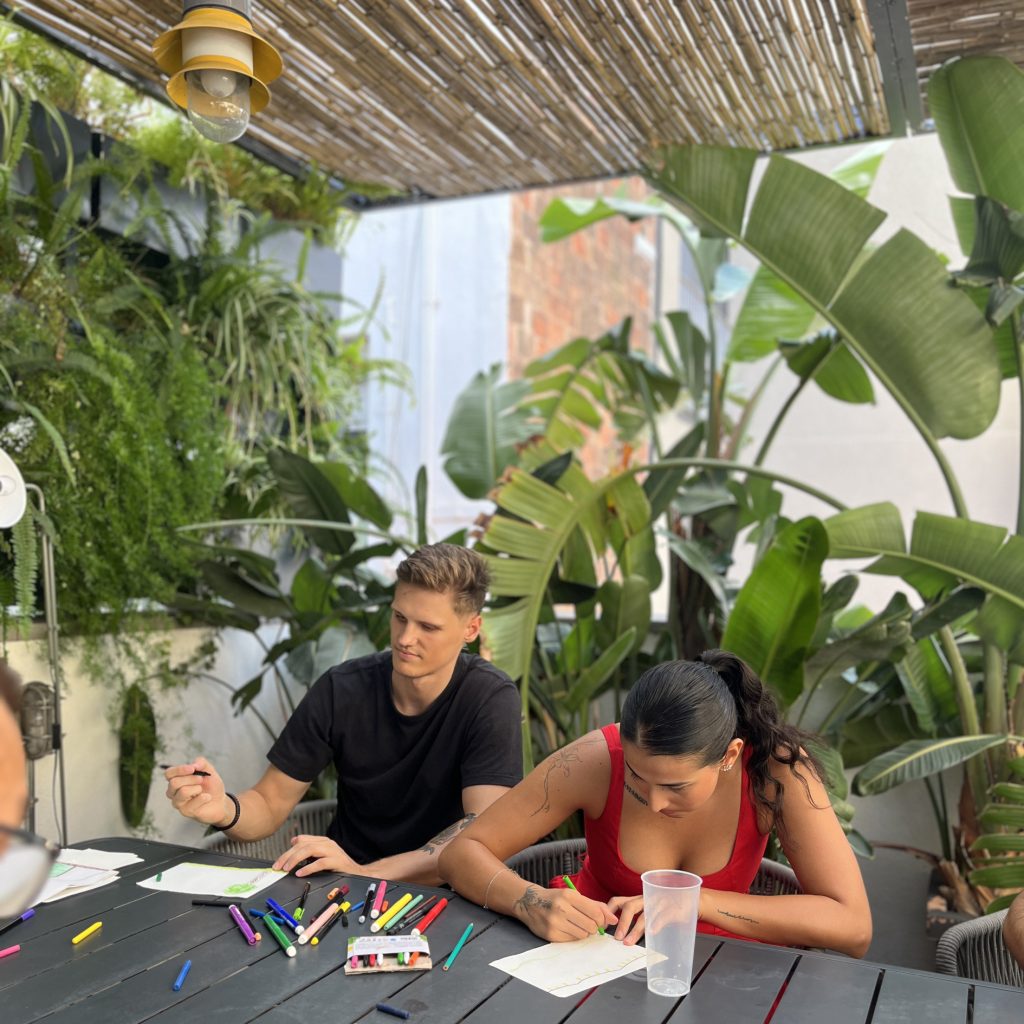
What started with nothing more than paper and crayons became a community. Creative challenges that thousands of people participate in. A podcast that gathers creatives from around the world to share their stories. Live events in cities where strangers become friends over the shared vulnerability of making something together.
And now, a bigger vision: creating welcoming, accessible creative spaces in Barcelona and cities everywhere. Hubs where anyone, regardless of artistic skill, background, or profession, can pause, unplug, and feel at home. A café corner here. A monthly gathering in the park there. Permanent creative studios where the simple act of showing up with a pen is enough.
We are building a global movement around a belief that sounds almost too modest to be radical: Joy, presence, and connection are not luxuries. They are necessities.
And the path back to them might be simpler than we think. It might start with a blank page. And a crayon. And the decision to let yourself be a kid again, just for an hour.
An Invitation
If you’re reading this and something in you is saying I used to do that, that’s the version of you I’m talking about. The one who drew in the margins. Who made things just to make them. Who didn’t need a reason to be creative beyond the fact that it felt good to be alive.
That part of you is not lost. It’s just waiting.
To learn more about Lilibeth’s journey, listen to the podcast, or join the movement, visit souldoodles.org. Our kitchen tables and common rooms are always ready for a blank page and a box of crayons.
Why We Still Want to Read
When attention is everywhere, a book can bring it back. House of Readers starts with one small encounter.
The World Doesn’t Need More Productivity. It Needs More Doodles.
What happens when adults stop optimizing their time and pick up a crayon instead? The radical power of play.