



We still want to read, yet our attention is increasingly drawn towards faster and more immediate rewards. Why has staying with a book become so difficult? House of Readers begins with a simple idea: when reading is harder to start, books should become easier to encounter.
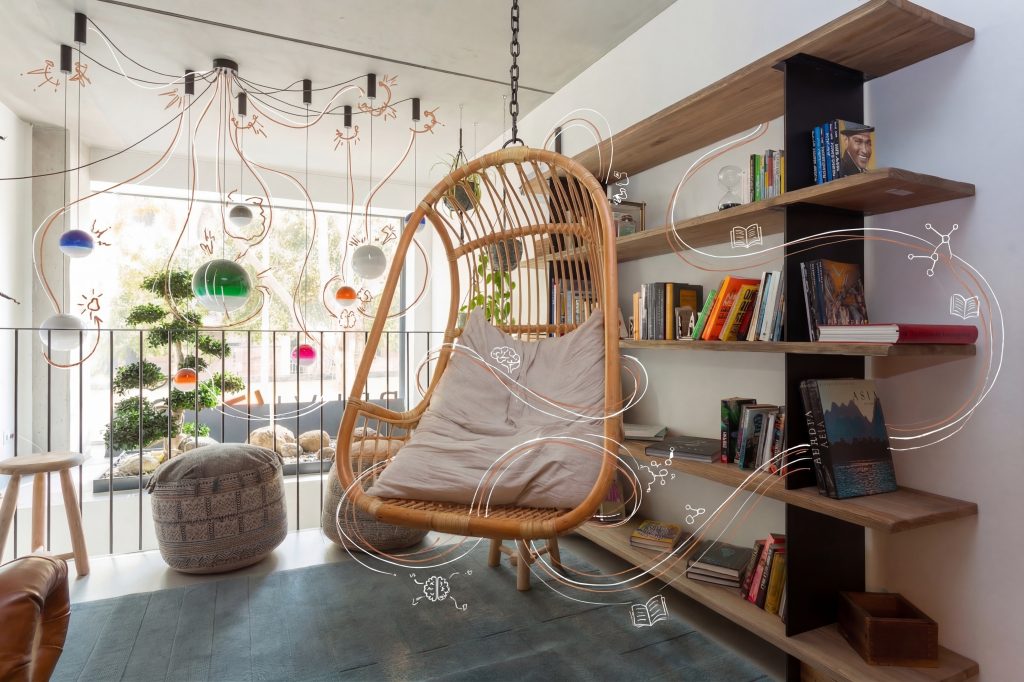
The book is still beside the bed. You bought it because someone recommended it, or because the first few pages felt promising. You meant to read a little before sleeping.
Instead, you picked up your phone.
A message led to a video. The video led to another. Then came a headline, a notification and a quick check of something that suddenly felt urgent. By the time you looked at the clock, the book was still there, unopened.
This is not unusual. Many of us want to read more. We know that books give us something valuable: focus, imagination, depth, access to lives and ideas beyond our own. We save reading lists, buy novels before holidays and carry books from one apartment to the next. Yet reading often struggles to find a place in our days.
A different kind of attention
Our attention now moves through an environment built around constant interruption. There is always something new to see, answer or check. Each refresh carries the possibility of a message, an image, a reaction or a small surprise.
These frequent cues engage the systems involved in anticipation, motivation and reward. Dopamine is sometimes described simply as the brain’s pleasure chemical, but its role is more complex. It is also connected to learning, expectation and the impulse to seek what might come next.
This helps explain why scrolling can feel so effortless: the next reward is never far away. Something new may appear within seconds.
A book follows a different rhythm. Its meaning develops slowly. A character becomes familiar over time. An argument takes shape across several pages. A sentence may only reveal its importance after we have carried it with us for a while.
Reading asks us to remain with one thing before knowing exactly what we will receive from it. That can feel increasingly difficult when our attention has become accustomed to speed.
We have not stopped caring about books
The strange part is that the desire to read has not disappeared. We still recognise the difference between moving through information and truly entering an idea.
Reading gives the mind time to form connections rather than simply react. It lets us follow a thought beyond its headline. It asks us to imagine what another person sees, fears or understands.
When we read a story, we temporarily enter a consciousness different from our own. When we read an essay, we allow another person’s reasoning to unfold before deciding whether we agree. Reading creates room for curiosity before judgement.
This does not make it morally superior to every other form of media. But it does make it different. It offers a kind of sustained attention that has become rarer in everyday life.
Perhaps that is why people so often say they wish they read more. The wish is not only about books. It is also about the kind of mental space that reading creates: quieter, slower and less fragmented.
The problem is often not intention
Most people do not need another lecture about the importance of reading. They already know.
The difficulty is often more practical. The book is not nearby. The choice feels too deliberate. The reading list has become another task. Starting requires more energy than reaching for the device already in our hand.
Habits are shaped not only by willpower, but also by environments. We tend to use what is visible, accessible and already part of our path.
A phone is always within reach. A book often is not.
This was the starting point for House of Readers.
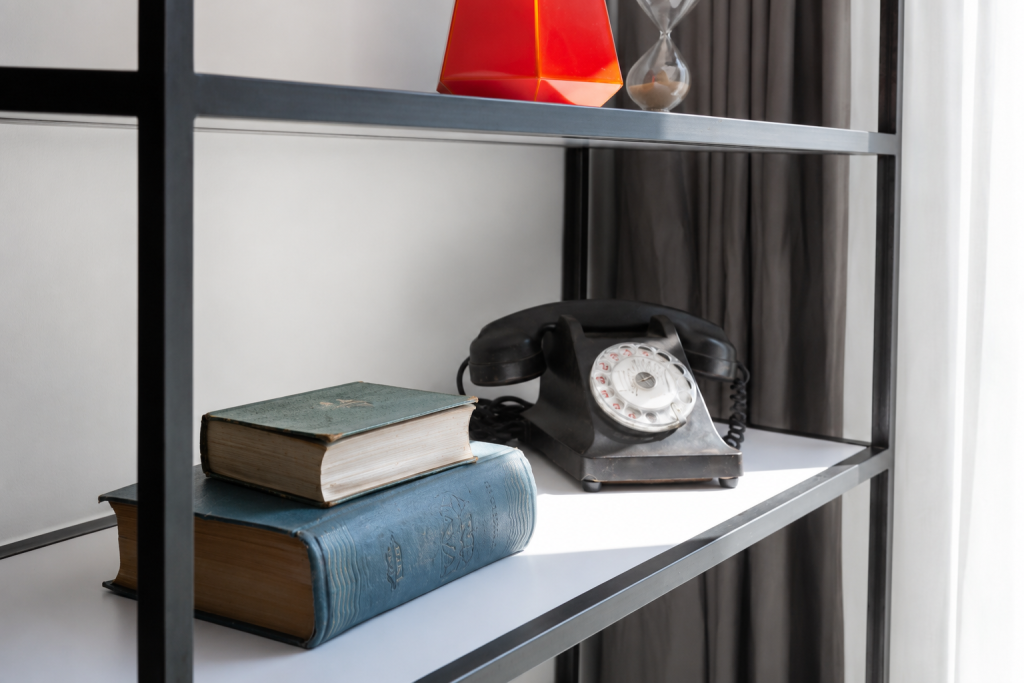
Making books easier to encounter
House of Readers began with a simple thought:
If reading has become harder to begin, perhaps books should become easier to encounter.
The idea is to let books circulate naturally through BelVillage homes and common spaces in Berlin and Barcelona. There is no formal programme to follow, and no expectation that residents should join a book club or complete a particular title.
The books are simply placed where life already happens: on a shelf near a common room, beside a sofa or on a table someone passes every morning.
Each one carries a House of Readers stamp and a link where residents can discover more, leave a recommendation or suggest another title.
A person might notice a book without having planned to read. They might open it while waiting for a friend, take it upstairs for the evening, read three pages and return it, or keep it for a week before leaving it somewhere else.
The first step becomes smaller.
Not: I should start reading more.
Just: What is this?
A small invitation to begin
House of Readers is not meant to compete with the smartphone or turn reading into another form of self-improvement. It simply changes the surroundings.
A book appears where everyday life already happens. You do not have to search for it, order it or decide in advance that you are ready to become a better reader.
You only have to notice it.
Perhaps the title catches your attention. Perhaps someone else has left a short recommendation. Perhaps you open it while waiting for a friend and read a few pages before taking it upstairs.
That encounter may lead nowhere. Or it may create the small pause you had been missing.
This is what House of Readers hopes to make possible: not a programme, an obligation or a rejection of technology, but an easier way back into reading.
Because attention is not recovered through one dramatic decision. It is rebuilt through repeated moments in which another choice becomes possible.
Sometimes that choice begins with a book placed quietly in your path.
Pick it up. Keep it for a while. Then leave it somewhere another reader might find it.
The rest of its journey belongs to them.
To learn more about the House of Readers initiative, discover the books already in circulation and suggest a title for the collection, visit our House of Readers page.
Why We Still Want to Read
When attention is everywhere, a book can bring it back. House of Readers starts with one small encounter.
The World Doesn’t Need More Productivity. It Needs More Doodles.
What happens when adults stop optimizing their time and pick up a crayon instead? The radical power of play.